
Lenme: Borrowing and Lending
Lenme: Borrow and LendFinance
4.24.70K Reviews
- Version
- 26.6.1
- Installs
- 500.00K
- Age Rating
- Everyone
Screenshots
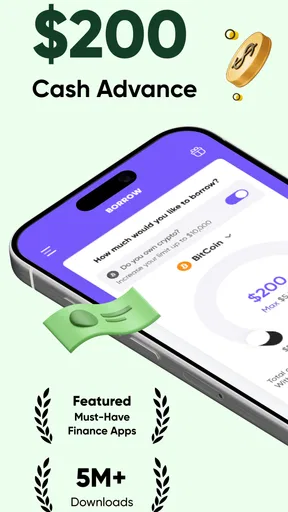
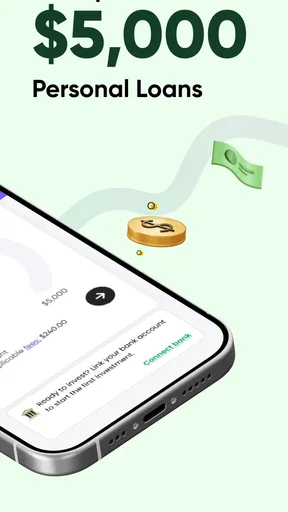
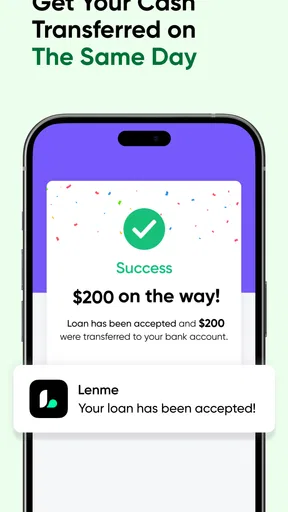
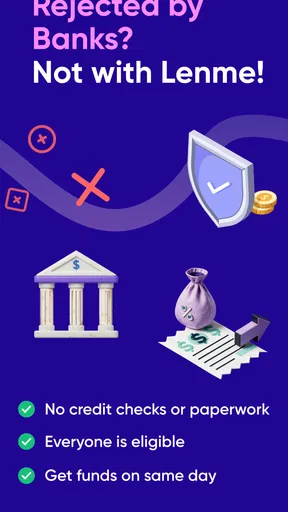
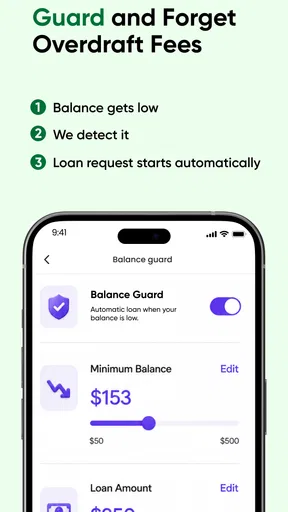
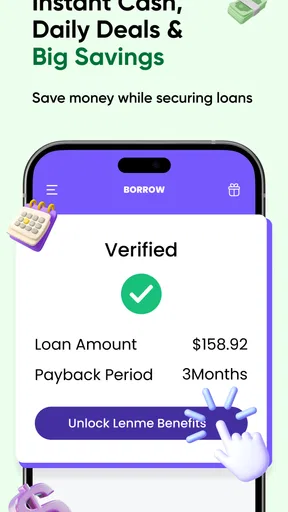
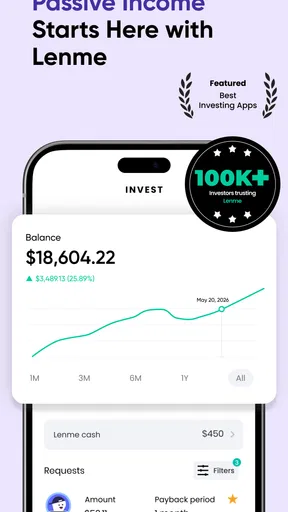
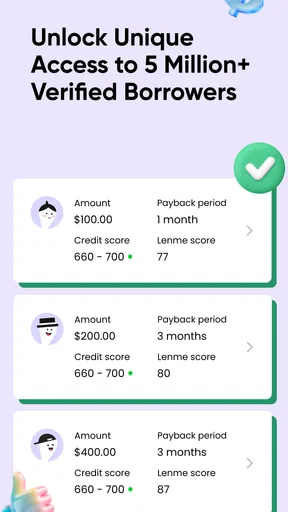
Our Review of Lenme: Borrowing and Lending
 Analysis by Appyee
If you need short-term access to cash or are considering lending money to other people, the first question I’d ask is whether you’re comfortable with a marketplace rather than a familiar bank product. Lenme: Investing and Borrowing brings those two sides together in one finance app: borrowers can seek offers, while investors can browse loan requests. I like that the choice is not limited to one role, but the setup also calls for more judgement than a simple savings or budgeting app.
My decision rule is straightforward: use it only if you have time to compare terms, understand the risk of lending, and can manage a financial commitment without relying on a guaranteed outcome. If your priority is predictable access to your own money, a conventional savings option may suit you better. If you need to compare possible borrowing offers, or want to consider peer lending as one part of a broader plan, Lenme is more relevant.
Start with the choice you actually need to make
Before opening an account, I’d separate the borrowing decision from the investing decision. They share an app, but they are not interchangeable ways to use spare cash. A borrower is looking for funds and needs to judge the full cost and repayment obligation of an offer. A lender is putting money at risk in expectation of repayment and a return. It is worth deciding which situation describes you before exploring the other side of the marketplace.
That distinction matters in everyday use. If an unexpected bill arrives, the immediate question is not simply whether an offer appears, but whether its repayment fits your next months of expenses. If you are considering lending, the key question is not merely whether a request looks appealing; it is whether you can accept the possibility that repayment may be delayed or uncertain. I would not treat either side as a substitute for an emergency fund or a guaranteed investment.
Where the two-sided marketplace is useful
The app’s central strength is that it lets a borrower look at potential lender offers rather than assuming that every applicant receives the same option. Comparing offers can help you focus on the terms that matter to your own budget. I’d read each one carefully, note the total amount to repay and any timing details shown, and avoid choosing based only on how quickly cash might arrive. The most convenient offer is not automatically the most affordable one.
For investors, browsing individual requests offers a more hands-on alternative to placing money in a broad product and leaving every decision to a provider. That control has a trade-off: you need to make choices yourself and accept that an individual loan is different from cash held in a savings account. I would start by deciding how much money I could leave committed, then review requests selectively instead of feeling obliged to lend simply because the app presents opportunities.
A realistic example is a household facing a necessary repair just before payday. Lenme may be worth checking if the person can compare the available borrowing terms and has a workable repayment plan. It is a poor fit if they need certainty that funds will arrive immediately, cannot afford repayment, or are using one loan to cover another. For someone with spare money, the reverse scenario applies: a loan request could be considered only with funds they do not need for regular bills or near-term plans.
Using Lenme with care
Lenme is a finance app from Lenme: Borrow and Lend. It is free to install, though it offers in-app purchases, and its listed age rating is Everyone. The app has a 4.3 average from around 16,000 ratings, with over 500,000 installs; those figures suggest broad interest, but they should not replace your own assessment of loan terms and risk. The developer has continued the app through version 26.1.0, and the release history begins in January 2019.
Borrowing requires a repayment-first mindset
When assessing an offer, I’d work backwards from the repayment date rather than starting with the amount I hope to receive. Check whether the payment would collide with rent, utilities, or other fixed costs, and leave room for an ordinary surprise expense. If the numbers only work when nothing goes wrong, I’d look elsewhere or reconsider borrowing. A marketplace can make comparison easier, but it cannot make an unaffordable repayment affordable.
It is also sensible to treat the application as a process rather than an instant promise. The app connects borrowers with potential lenders, but a request and an offer are not the same thing as cash already in hand. I would avoid making a purchase or committing to a payment on the assumption that funding is certain until the arrangement is confirmed and I understand its conditions. That practical caution is especially important when the expense has a firm deadline.
Investing means accepting a different kind of uncertainty
For a lender, the ability to choose requests can feel more direct than buying a diversified fund, but that control comes with responsibility. A displayed risk level or potential return is a starting point for judgement, not a guarantee. I would keep any lending allocation modest relative to my finances, spread decisions thoughtfully if the available choices allow, and avoid committing money I may need back on a specific date. The point is not to chase the most attractive-looking return; it is to understand what could happen if repayment does not follow the expected path.
This is where Lenme differs from the usual alternatives in personal finance. A bank savings account is generally chosen for access and familiarity, while a diversified investment product is designed to put less emphasis on selecting individual borrowers. Lenme’s appeal is the ability to engage with loan requests directly. That makes it more involved, and it may be the wrong option for someone who wants simple, predictable cash management or a hands-off investment approach.
Small habits that make comparison more useful
I would keep a simple record outside the app of any offer or lending decision I am seriously considering: the amount, the important terms, the expected timing, and how it fits my monthly budget. That makes it easier to compare options without relying on memory or being swayed by the most recent request. For borrowing, the record can show the effect of repayment alongside existing bills. For lending, it helps prevent several individually small choices from becoming a commitment that is too large overall.
Another useful habit is to set a stopping point before browsing. A borrower can decide in advance what repayment burden is acceptable and decline anything beyond it. An investor can decide how much of their available money is genuinely suitable for lending, then stop when that limit is reached. This is a simple way to keep the app’s two-sided design from encouraging a decision that feels convenient in the moment but does not fit a longer-term plan.
What to expect from setup and day-to-day use
Setting up Lenme was a breeze. I downloaded the app, and within minutes, I was all set up and ready to explore its features. The app's interface is intuitive, which is a huge plus for folks who aren’t exactly tech-savvy. Navigating through the app felt like a walk in the park. Everything is laid out clearly, making it easy to switch between borrowing and investing options.
That approachable layout lowers the barrier to exploring both sides, but it should not shorten the time you spend checking a financial decision. I’d use the clear separation between borrowing and investing to keep my purpose in view: browse as a borrower when comparing a need, and browse as a lender only when assessing money I can afford to commit. The app is not a replacement for a personal budget, so I would keep that budget open while reviewing options.
Comparing offers without rushing
Alright, now let’s talk about borrowing. If you're like me and sometimes find yourself needing a quick loan, this part of Lenme will pique your interest. The process is straightforward. You input the amount you need and provide some basic information about yourself. The app then connects you with potential lenders. What I found particularly cool is how you can see different offers and choose the one that best suits your needs. It's like having a bunch of lenders competing for your attention. Plus, you get to avoid the hassle of traditional banking paperwork.
The meaningful advantage here is the opportunity to compare, not a reason to accept the first available offer. I’d put each option beside my repayment-first budget and check that the amount and timing solve the original problem without creating a bigger one. If no offer fits, walking away is a valid outcome. Someone who needs a fixed, dependable borrowing arrangement may prefer to speak directly with a bank or credit union, where the process and product may be more familiar to them.
Choosing requests as an investor
On the flip side, if you’re looking to invest, Lenme offers a pretty neat platform for that too. You can browse through various loan requests and decide who you want to lend your money to. It’s a bit like shopping, but instead of buying things, you’re investing in people. You can choose investments based on risk level and return potential, which I found incredibly empowering. It’s like being your own boss in the investment world.
I would balance that feeling of control with a clear view of what it does not remove: the uncertainty attached to lending. A request that appears suitable still deserves a cautious decision, and a potential return should not be treated as money already earned. Compared with a hands-off investment account, this approach asks for more attention to individual choices. If I wanted investments managed as a broader portfolio, I would compare that sort of service instead of assuming individual loan selection is automatically better.
Trust, privacy, and sensible checks
Of course, with any app dealing with money, security is a top concern. Lenme takes this seriously. They use encryption and other security measures to protect your information. I felt pretty safe using the app, knowing that they have these safeguards in place. It’s always nice to have peace of mind when dealing with financial transactions.
Even with security measures, I would keep ordinary account-safety habits in place: use a strong device passcode, protect access to the account, and review any financial details before confirming a transaction. Security helps protect information, but it does not tell you whether a particular loan is suitable for your budget or risk tolerance. I would judge those as separate questions rather than treating a secure app as proof that every offer is right for me.
Help and the friction to expect
One thing that stands out about Lenme is the user experience. Everything from the design to the functionality is crafted with the user in mind. You can tell they’ve put a lot of thought into making the app as user-friendly as possible. The support section is also quite helpful, with FAQs and customer service options readily available. It’s like having a little helper in your pocket, ready to assist whenever you need it.
The easy navigation is useful, but a smooth interface cannot remove the effort involved in evaluating money decisions. I would still expect to spend time reviewing the terms, checking how an obligation fits my cash flow, and deciding whether a lending choice suits my risk tolerance. The app makes the marketplace easier to explore; it does not make either side automatic. Anyone who finds comparing financial terms stressful may be better served by a simpler product and direct advice from a trusted financial professional.
Who should choose another route
I would skip Lenme if my main need were a dependable place to hold emergency savings, a guaranteed investment outcome, or a loan whose repayment I could not comfortably manage. It is also not the natural first choice for someone who wants every investment decision made for them. Traditional savings products, mainstream personal-loan providers, and diversified investment services serve different purposes; comparing those categories is more useful than assuming one app can replace them all.
There is also a practical cost to switching from an established routine. If you already manage borrowing through a bank or keep investments in a familiar account, moving attention or money to a new marketplace means learning a different process and tracking another financial relationship. I would begin by exploring without committing, then make one deliberate decision only if the terms and workflow clearly improve on what I already use. There is little value in adding complexity just to try a new app.
My recommendation
So, what’s the final verdict on Lenme: Investing and Borrowing? I’d say it’s a solid app for anyone looking to borrow or invest money conveniently. It combines ease of use with robust features, making it accessible to a wide range of users. Whether you're looking to make some quick returns on your investments or need to borrow some cash without the usual fuss, Lenme has got you covered. It’s definitely worth checking out if you’re in the market for a versatile financial app.
My recommendation is narrower than a blanket endorsement: I’d try it if I wanted to compare borrowing offers or deliberately evaluate peer-lending requests, and I was prepared to read the terms rather than act on convenience alone. I would not use it as a substitute for a cash reserve or a low-effort, predictable investment. Lenme is most useful when its marketplace gives you a choice you genuinely need; if certainty and simplicity matter more, the familiar alternatives are likely the better fit.
Verdict
Strengths of Lenme: Borrowing and Lending
- User-friendly interface for easy navigation.
- Flexible loan terms for borrowers.
- Investors can earn competitive returns.
- Quick approval process for loans.
- Secure transactions with encryption.
Limitations of Lenme: Borrowing and Lending
- High interest rates for some loans.
- Limited customer support options.
- Requires a good credit score for better rates.
- Not available in all countries.
- Some fees may apply to transactions.
Similar Picks in This Category
View All
Google Wallet
Google LLC4.3

Airtel: Recharge, Bank & Loans
Airtel4.0

PayPal - Pay, Send, Save
PayPal Mobile4.2

DANA Indonesia Digital Wallet
PT Espay Debit Indonesia Koe4.5

Binance: Buy Bitcoin & Crypto
Binance Inc.4.8

Cash App
Block, Inc.4.7
Frequently Asked Questions
What is Lenme and how does it work?
Lenme is a mobile app designed to connect borrowers with individual investors. Borrowers can request loans, while investors can fund these loans to earn interest. The app facilitates peer-to-peer lending, allowing users to negotiate terms and manage repayments directly through the platform.
Is Lenme safe for both borrowers and investors?
Yes, Lenme utilizes advanced security measures to protect user data and transactions. It includes identity verification and encryption to ensure a secure environment. However, as with any financial platform, users should review terms carefully and ensure they understand the risks involved in lending or borrowing.
What are the eligibility requirements to borrow or invest on Lenme?
To borrow on Lenme, users must be at least 18 years old, have a valid government ID, and possess a steady income source. Investors need to be at least 18 and have a bank account to facilitate transactions. Both parties must comply with legal requirements specific to their location.
How does Lenme handle interest rates and loan terms?
Interest rates and loan terms on Lenme are negotiated directly between borrowers and investors. The platform provides guidelines and tools to help both parties reach a mutually agreeable arrangement. Rates typically depend on borrower profiles and market conditions, offering flexibility for customized agreements.
Are there any fees associated with using Lenme?
Yes, Lenme charges fees for its services. Borrowers pay an origination fee based on the loan amount, while investors might incur a service fee on their earnings. These fees are clearly outlined in the app's terms of service, so users can understand the cost structure before proceeding.
